There are ideas that arrive like a flash of lightning. And there are ideas that grow slowly, like a tree — taking root in a question drawn from everyday life, then quietly taking shape over the years. CD Restop, for me, belongs to the second kind.
I once wrote somewhere that a human life, in the end, is a series of stops along the way. Back then, I wrote it as a metaphor. But the more I traveled the long roads of this country, the more I saw that the metaphor needed to be built — in brick, in steel, in real shade — because out on the road, there are people who need a rest stop in the most literal sense of the word.
Why I do this — the honest answer
Think of a long-haul driver. He carries freight through the night, and behind the wheel he carries the livelihood of an entire family. The 2024 Law on Road Traffic Order and Safety states that a driver must not stay at the wheel for more than four hours at a stretch — a humane rule, because fatigue behind the wheel has already taken too much from too many people. But the law only answers the question of when to stop. Another question, closer to life itself, still hangs over the roads: where do you stop — so that rest is truly rest?
Our country's expressways grow longer every year. Electric vehicles multiply by the day. Yet decent rest stops — places with a clean meal, a short sleep, a charging station, a proper restroom — have not kept pace. We founded CD Restop in 2017 to go and answer that question. Not with a slogan, but with a model we believe in: the rest stop as a small institution of social care.
What can a rest stop be?
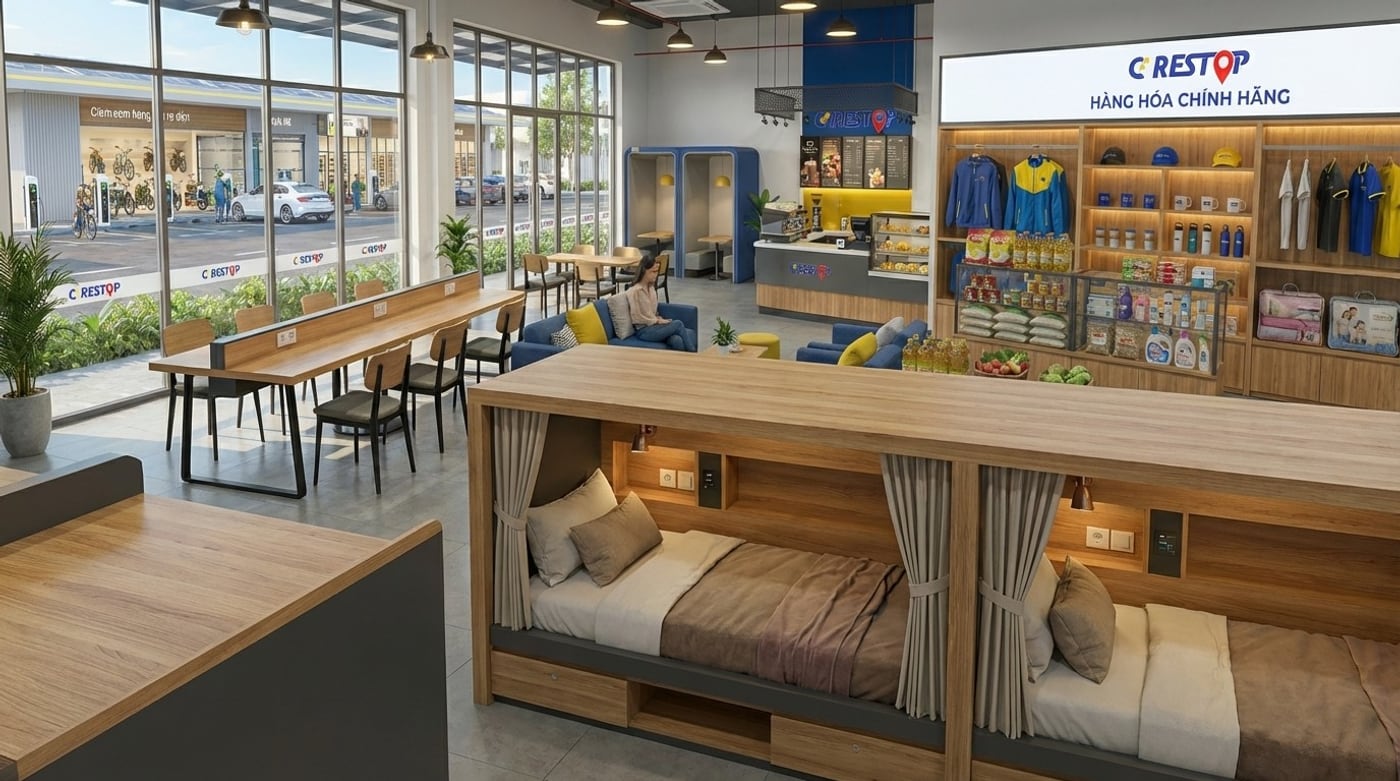
At the words "rest stop," people tend to picture a parking lot with a few food stalls. We think differently. A rest stop worthy of the name must answer all the needs of the traveler: a safe place to park, a decent meal, a short sleep to recover one's strength, a charging station for the electric vehicle, and even a corner that connects with the local community. At CD Restop, the vehicle is charged by the Scharge system we developed with our partner SPT; the person is "recharged" by a warm meal, by a sleeping pod, by a clean restroom — a thing that seems small, yet carries the dignity of an entire journey.
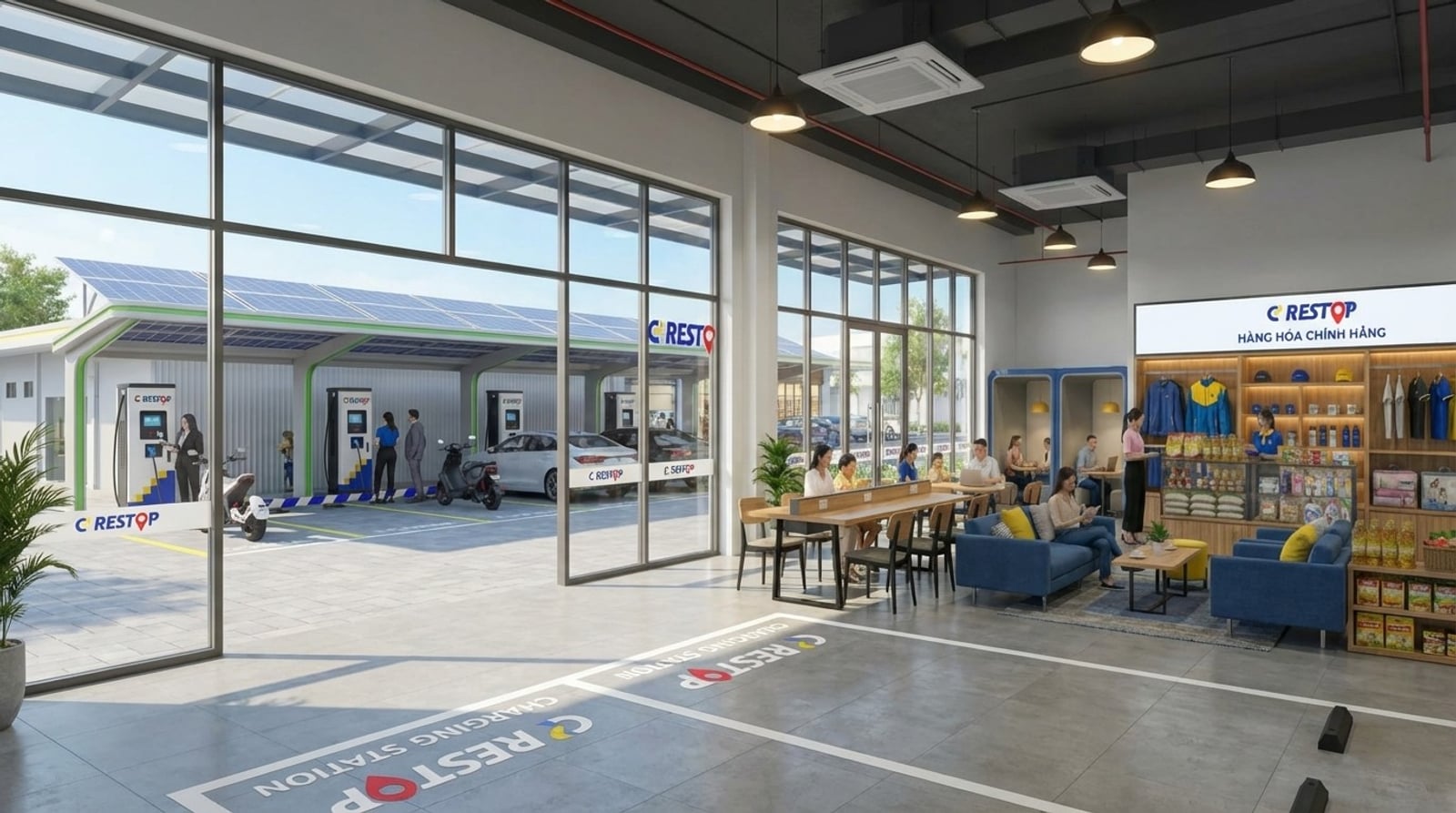
I often tell my team: we are not building a gas station with a diner attached. We are building a shared front porch for people on the road — where a container-truck driver and a family on vacation are treated exactly the same. Social care, to me, is not charity. Social care is infrastructure. It must be designed, operated, and properly sustained — like every other piece of this country's infrastructure.
Going together
We started small: the first locations in Ho Chi Minh City — some newly in operation, some still under construction. But the road is long: our goal is a network of rest stops along the country's key routes in the years ahead. CD Restop cannot walk that whole road alone — nor should it. This September, together with our strategic partners — from telecommunications and clean energy to infrastructure investment — we will formally put pen to paper on our cooperation agreements. I still believe what I have always believed: no one goes far alone.
A closing word
Half a lifetime in business has taught me that the most enduring works often begin with the simplest questions. "Where do you stop, so that rest is truly rest?" — a question simple enough that everyone has met it, and large enough that we have walked toward its answer for years without reaching the end. But the direction is clear, and the first bricks have been laid in the ground.
We build rest stops — so that the Vietnamese can go farther.
Ho Chi Minh City, August 2026 — Nguyễn Ngọc Hải